Trust issues with psychopathic character: reichian body cues


Trust issues and psychopathic character structure present a complex clinical profile that blends early attachment disruption, chronic somatic defenses, and characteristic relational strategies such as manipulation, emotional detachment, and control. Grounded in Wilhelm Reich’s concept of character armor and Alexander Lowen’s work in bioenergetics, this article maps how the psychopathic character structure forms in the body and mind, how it creates pervasive trust deficits in others and self, and what trauma-informed, body-oriented interventions offer for clinicians, students of somatic psychology, and clients who recognize these patterns in themselves.
Transition: First, we need a rigorous working definition of the psychopathic character structure through the lens of Reich and Lowen, emphasizing the body-based architecture of the pattern.
Understanding the psychopathic character structure through Reich and Lowen
Defining the structure in Reichian and bioenergetic terms
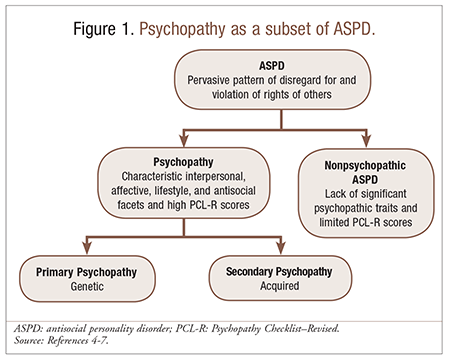
The psychopathic character structure is not identical to forensic psychopathy; rather, in Reichian and Lowen's language it describes a chronic, organized pattern of muscular and emotional defenses that sustain a detached, exploitative stance toward others. Reich named the habitual muscular tensions and emotional closures that protect against feeling as character armor. Lowen reframed this into observable posture, breathing, and tension patterns in his system of bioenergetics. Within this paradigm the psychopathic character structure typically includes an armor that suppresses attachment hunger, shame, and vulnerability while privileging a controlled, assertive or predatory stance in social interaction.
Core organizing affects and developmental roots
The core affects underlying this structure usually include suppressed shame, chronic fear of dependency, and unprocessed rage. These originate in early relational ruptures—abandonment, inconsistent caregiving, or abusive boundary violations—that made emotional openness unsafe. The child learns survival strategies: emotional constriction to avoid abandonment, manipulation to secure resources, and pseudo-independence to manage fear of engulfment. Over time these strategies ossify into stable patterns that feel effective but create deep trust erosion both inwardly (difficulty trusting one's own needs) and outwardly (distrust of others unless they can be controlled).
Body signatures: posture, breath, and movement
Reich and Lowen paid close attention to the body as primary source of diagnostic information. The psychopathic structure frequently presents with a rigid, upright posture, restricted thoracic breathing, tightness in the jaw and neck, and a sense of coiling in the torso and pelvis. Movement tends toward suddenness—quick, predatory gestures rather than fluid connection. There is often a capacity for detached charm backed by muscular control that can shift rapidly to aggressive or constricting behaviors when challenged. These somatic patterns both express and perpetuate a chronic state of guarded readiness that limits affective resonance and trust.
Transition: Having mapped the structure itself, next we examine how trust issues emerge within this organization and what they feel like for clients and partners.
How trust issues develop and function in the psychopathic character structure
Attachment trajectories that cultivate distrust
Trust issues in this structure are rooted in formative attachment dynamics. When early caregivers were unpredictably responsive or exploitative, the infant cannot safely depend on relational repair. Internal working models then encode others as unreliable or threatening. Rather than integrating vulnerability and secure dependence, the child adopts strategies—emotional withholding, instrumentalizing relationships, feigned dependability—that prioritize control. These patterns calcify into an adult interpersonal strategy that replaces trust with calculated risk assessment and manipulative contingencies.
Manipulation wound and the compulsive need for control
“Manipulation wound” names the internalized belief that the world is only safe if others are controlled or used instrumentally. It’s a wound because it originates in adaptive attempts to procure safety in an unsafe environment, but becomes maladaptive: the person consistently uses charm, coercion, or emotional bluffing to shape others’ behavior instead of negotiating mutual vulnerability. Control functions as a false security: it reduces immediate uncertainty but prevents the corrective experiences of reliable reciprocity that would heal trust. The psychological cost is high—relationships are transactional, intimacy is shallow, and the person’s own felt-sense of authenticity is diminished.
Somatic experience of mistrust: what it feels like in the body
Trust issues are somatically embodied. Clients often describe a constricted chest, rapid or shallow breathing, a numbing through the limbs, or a sense of a “hard shell” around the heart. Autonomic signatures may alternate between blunted affect (hypoarousal) and brief surges of mobilized anger (hyperarousal) when boundaries are crossed. Dissociation is common: the person observes interactions from a removed vantage point rather than participating, which feels protective but perpetuates isolation. Recognizing these bodily markers is essential for clinicians because cognitive insight alone rarely shifts deeply held somatic defenses.
Transition: To intervene effectively, clinicians must be able to recognize diagnostic and contextual signals that this structure is present and modulate risk ethically.
Assessment and clinical indicators
Interview and relational indicators
In conversation, expect grandiosity thinly covering vulnerability, minimization of past hurts, and skillful use of charm. There may be frequent stories that place the client as the rescuer or the one wronged, with little admission of reciprocal responsibility. Check for a history of unstable relationships, occupational boundary issues, and repeated patterns of betrayal or exploiting others. Importantly, psychopathic character patterns can coexist with genuine trauma complaints; a careful, non-reifying approach distinguishes adaptive mistrust from pathology that requires higher-level risk management.
Somatic assessment: posture, breath, and affective range
Observe for restricted breath (thoracic or clavicular), high neck and jaw tension, flattened affect punctuated by sudden reactive shifts, and movement qualities that are controlled, precise, and predatory. Palpate for rigid muscle bands along the chest, abdomen, and pelvic floor—areas Reich and Lowen identify with blocked emotional discharge and diminished orgastic potency (the capacity to discharge tension and experience full emotional release). Assess interoceptive awareness: many in this structure have poor access to bodily cues of hunger, fear, or pain.
Risk management and ethical boundaries
Clinical work with this structure demands clear risk protocols. Manipulation of the therapeutic frame, boundary testing, and potential threats to others require strong ethical safeguards: consistent limits, documented agreements, and collaboration with multidisciplinary teams when necessary. Therapists must cultivate their own somatic regulation to avoid reactive ruptures or being coerced into collusion. Supervision, consultation, and clear referral pathways are essential components of safe care.

Transition: With assessment complete, we can describe concrete Reichian and bioenergetic interventions adapted to address trust issues and the psychopathic character structure.
Therapeutic approaches grounded in Reich and Lowen
Vegetotherapy: accessing and softening character armor
Vegetotherapy, Reich’s foundational bodywork, targets the muscular armor through palpation, movement, and directed attention. The aim is not to force catharsis but to create safe opportunities for affective recontact. For psychopathic structures this often begins with brief, contained somatic exploratory work: gentle chest and diaphragm softening, allowed sighs, and guided jaw and neck releases. These interventions restore a modulated expressivity and introduce a felt sense that strong emotions can be survived without collapsing the self—crucial for rebuilding internal trust that needs can be felt and tolerated.
Bioenergetic exercises for grounding and affect regulation
Lowen’s exercises emphasize grounding through the feet, expressive vocalization, and rhythmic movement to mobilize blocked energy. Simple practices—stomp-and-release, pelvic rocking, vocalized exhales—help reorganize autonomic tone from defensive mobilization to regulated engagement. The goal is to expand tolerance for affective states, reduce impulsive need for control, and increase embodied authenticity. For leadership-type clients, these exercises translate into better stress tolerance and less reliance on manipulative tactics to maintain power.
Working with boundaries, empathy training, and recontacting vulnerability
Therapy must concurrently build relational skills: clear boundaries, honest communication, and graduated exposure to vulnerability. Use somatic mirroring and polyvagal-informed techniques to teach attunement—recognizing the therapist’s calm regulation helps the client downregulate and experiment with reciprocity. Structured exercises, such as paced self-disclosure and receiving compassionate feedback, create corrective relational experiences that slowly rebuild capacity to trust. Emphasize responsibility and repair: when the client violates a boundary, use it as therapeutic material to model accountability and reestablish safety.
Transition: Applying these methods requires an organized treatment plan—below is a phased formulation tailored to the specific needs of this character structure.
Case formulation and phased treatment planning
Phase one: stabilization and resourcing
Early work focuses on safety and somatic stabilization. Teach basic self-regulation tools—grounding, paced breathing, orienting responses—to reduce reactivity during relational stress. Assess attachment systems and external supports; when possible, strengthen secure relationships. Stabilization reduces defensive splintering and decreases the need for manipulative strategies as survival tools.
Phase two: safe affect mobilization and armor softening
Once baseline regulation is stable, introduce progressive bioenergetic work and vegetotherapeutic exploration. Sessions prioritize tolerable affect increases and somatic felt-sense awareness. Clinicians use titration—short, repeated windows of affective contact followed by grounding—to avoid retraumatization. This phase cultivates interoceptive accuracy, helping clients distinguish sensation from catastrophic interpretations that fuel mistrust.
Phase three: relational integration, responsibility, and social repair
Begin active relational work: role-plays for honest disclosure, practice in repairing ruptures, and tasks that require consistent follow-through. Use real-life laboratory exercises—requested apologies to friends, monitored boundary re-negotiations—to generate embodied evidence that vulnerability can yield constructive outcomes. The emphasis shifts from technique to moral practice: learning to make and own mistakes, to repair, and to accept dependence when adaptive.
Phase four: consolidation, relapse prevention, and autonomy
Consolidation integrates new somatic patterns with daily life. Create a relapse prevention plan targeting triggers (e.g., feeling abandoned, competitive threat) and rehearsing adaptive responses. Encourage ongoing bioenergetic practice to maintain emotional fluidity and sustain changes in relational behavior. Measure outcomes with functional indicators—improved relationship stability, reduced manipulative incidents, and subjective increase in trust capacity.
Transition: Practical, short-term tools can be used within sessions and between appointments to support clients and clinicians during this multi-phase work.
Practical skills and exercises for therapists and clients
Three-minute somatic re-regulation protocol
Use this quick intervention when clients dysregulate or test boundaries: 1) Ground—feet rooted, slow 6-count exhale while feeling weight on feet. 2) Open—gentle shoulders back, five gentle sighs with vocalization “ah” to soften chest. 3) Orient—scan body and name one sensation without judgment. This reduces sympathetic escalation and creates a reparative moment within the session, allowing difficult material to be explored without acting out.
Anchored truth-telling: a script for rebuilding trust
Teach a brief script for authentic disclosure: “When X happened I felt Y in my body (e.g., tight chest), and I acted by Z. I’m sorry because I want this relationship to be different.” Anchoring the admission to a bodily sensation bypasses rationalization and invites accountability. Practiced repeatedly in session, it helps repair manipulation patterns by training a predictable pathway from somatic cue to ownership and repair.
Boundary rehearsal and graduated vulnerability
Create homework that scaffolds vulnerability: start with low-risk disclosures and increase scope as tolerance builds. Pair disclosures with bioenergetic grounding immediately after to integrate emotional releases. For clients with leadership or high-control roles, simulate workplace scenarios where they practice saying no, delegating without micromanaging, and accepting feedback without defensive counterattacks.
Transition: Measuring progress and tailoring interventions to specific populations increases treatment efficacy—below are frameworks and indicators for clinicians to apply.
Measuring progress and tailoring interventions
Functional and somatic outcome indicators
Quantify progress with both relational and somatic markers. Relational indicators: fewer manipulative incidents, longer-term relationships, improved conflict resolution, and willingness to seek support. Somatic indicators: increased diaphragmatic breathing, reduced jaw and neck tension, improved interoceptive reporting, and longer windows of affect tolerance. Use simple session-based scales (e.g., 0–10 ratings of trust, shame, and control urges) paired with observational notes about behavior changes.
Adapting for leaders, executives, and high-functioning controllers
High-functioning clients often value results and efficiency; translate somatic work into performance language. Position interventions as methods to decrease burnout, improve team trust, and enhance genuine influence (versus coercion). Short, practical exercises that can be practiced discreetly at work build buy-in. Align therapeutic goals with professional outcomes—better delegation, authentic leadership, and sustainable influence.
When to consult, refer, or integrate modalities
If there are indications of significant risk (violence, exploitation of vulnerable persons), comorbid severe substance use, or forensic concerns, consult multidisciplinary teams and consider referral to specialty services. Integrate modalities—CBT for cognitive restructuring around beliefs about trust, EMDR for specific attachment traumas, and psychiatric collaboration for distressing dysregulation—to create a comprehensive, ethically sound plan.
Transition: Finally, a concise summary and an actionable, prioritized set of next steps for clinicians and clients consolidates the work.
Concise summary and actionable next steps
Summary of essentials
The psychopathic character structure incorporates entrenched character armor, an interpersonal strategy of control and manipulation, and resulting trust deficits that are embodied and maintained by autonomic and muscular patterns. Reich and Lowen’s frameworks prioritize somatic assessment and interventions—vegetotherapy and bioenergetic exercises—to soften armor, increase affect tolerance, and create corrective relational experiences. Auto-regulation, ethical boundaries, and phased treatment planning are central to safe, effective therapy.
Actionable next steps for clinicians
- Begin assessment with body-centered observation: note breath, posture, movement, and affective range.
- Implement a stabilization protocol: teach grounding, paced exhalation, and a three-minute somatic re-regulation routine.
- Use titrated vegetotherapeutic and bioenergetic exercises to soften armor while maintaining strong boundaries in the therapeutic frame.
- Prioritize relational repair exercises that train responsibility, apology, and graduated vulnerability.
- Document functional outcomes (trust ratings, conflict incidents) and consult when risk or forensic elements appear.
Actionable next steps for clients
- Practice daily grounding: 3–5 minutes of feet-anchoring and slow exhalation to lower baseline reactivity.
- Keep a short somatic journal: note bodily cues during relational stress and one small responsible act to repair when possible.
- Try one bioenergetic exercise daily (stomp-and-release or vocalized sighs) to build emotional circulation.
- Engage in therapy that integrates somatic work and clear boundary-setting; expect gradual change and practice accountability routines.
These steps create a coherent path from somatic awareness to relational reliability—repairing trust is a procedural, body-informed process rather than simply a cognitive decision. The therapeutic promise is not to erase defenses overnight, but to enable embodied trust through consistent practice, corrective relational experiences, and incremental softening of the armor that has both protected and imprisoned the self.